Showing posts with label Bonarda. Show all posts

Sunday, July 10, 2011

Summertime and The Sipping is Easy

With apologies to George Gershwin, summer is the time living is easy and we all look for light summer wines.

Here are some of my latest summer whites and a rose' I've been checking out.

Cristobal 1492 Verdelho - This wine and the Rose' below were easily the big winners of the past week.

I had picked up a bottle of Cristobal Bonarda at Cork + Cracker in Indy and really liked it a lot. I saw this bottle of Portugal's Verdelho grape from Mendoza in Argentina and knew I had to try it.

I loved this wine a lot. It had nice melon, foral and spicy flavors that were simply delicious. It's not a wine to ponder and evaluate - it's a wine to enjoy.

It picked up 90 points from one of the big wine publications and it's not hard to see why. And for $10???? You've got to be kidding me!

(Cristobal 1492 Verdelho, $9.99, Grapevine Cottage, Zionsville, Highly Recommended)
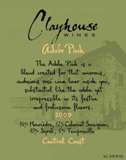
Clayhouse 2010 Adobe Pink - Sometimes I wish wineries producing really great Rose' wouldn't call them "Pink" only because it would be easier for me to get people to try Rose'.

But Clayhouse can call this really nice pink wine any color it wishes and I'd still recommend it. I haven't consumed much Rose yet this summer but I have several waiting in the wine racks. The Clayhouse has set the bar pretty high.

The Adobe pink gets a head start with my heart and head because it's such an interesting blend of 38 percent Mourvedre, 32 percent Syrah, and 30 percent Cabernet Sauvignon. Clayhouse is a Paso Robles winery that benefits from the rich flavors grapes give after a summer of hot days and cool nights.

Indeed, the wine is pink or maybe salmon is a better choice of words if you'd like a little more sophistication and avoid the "P" word. On the palate it delivered strawbertry and nice spice along with a dry finish. It was one of the most drinkable and well-made Rose' wines I've had in several summers. I loved it.

(Clayhouse 2010 Adobe Pink, SGR $14, Trade Sample, Highly Recommended)

By the way, Clayhouse now has an Indiana distributor so you Hoosier wine drinkers should seek out the "Adobe" line of wines - they're a great bang for the buck!

Cucao 2009 PX - Here is a new one for me and probably most of you. The PX in the wine's name means Pedro Ximénez. Yes, that's a grape kids! The grape has mostly been used for Spanish Sherry or even brandy.

For those of you looking for something different, here you go. This wine had a unique tartness on my palate. The taste was some cross between apricot, raisin, and lime, and definitely some minerality and pretty strong acid. I could see this wine with cold appetizers or maybe a salad. It is certainly on the dry side and you will notice the acid.

It's worth a try. I really had trouble deciding whether I even liked it or not. On the first night, I didn't care for it at all but on the second evening the acid had calmed down a bit and I found it sort of "intersting." Definitely a wine for the adventurous.

(Cucao PX, $9.99 at Cork + Cracker, Indianapolis, No Recommendation)

Gazela Vinho Verde - Here is an Albarino wine that is definitely different than others I've tasted. This is almost like a sparkling wine or at least a white with effervesence some would consider nearing carbonation. I found it a little odd.

It had bright flavors of grapefruit and a nice tangy citrus flavor that lingered on the palate.

If you like a little effervesence in your wine you're going to like this one. Serve it chilled on a hot summer day and your guests will be impressed with your adventurous spirit.

(Gazelo Vinho Verde, $7.99, Cork + Cracker, Indianapolis, Recommended)

Send comment or questions to: hewitthoward@gmail.com

Wednesday, July 21, 2010

Argentina's Bonarda Making a Comeback

My latest newspaper column as it appeared in 11 Indiana newspapers. I post all of the columns on this blog and separately on Grape Sense.

Argentina means Malbec, right? For many people that is the logical and most accurate perception. But long before Malbec became the rage, Bonarda was the grape of choice in that South American country.

I’ve written many times about Malbec as a great introduction to new varietals and also written about Malbec as one of Argentina’s best-known exports. But it might surprise many to know there is nearly the same amount of Bonarda planted in Argentina as Malbec.

Bonarda has been a staple in Argentina’s wine industry for years, used mostly in blending and for table wines. It is believed the grape came originally from Northern Italy’s Piedmont region. One school of thought was that Bonarda was California’s Charbono but that theory has been dismissed.

There is another faction that believes the grape comes from Savoie, France. But whether it genetically got its start in Italy or France, it’s definitely known as Argentine today.

The wines are easy to drink, fruity and very inexpensive. They have a bright and fresh texture with just enough acidity and even a little pepper. In most cases you’ll get really rich flavor along the lines of raspberries and other dark fruit from this deep purple juice.

The wine is easy to drink and good with grilled meat and red sauces.
A little research shows the grape is frequently described as the “workhorse” grape. It demands heat and sunshine, provides big yields, and is usually less expensive than Malbec.

It’s all over the internet that many of Argentina’s winemakers are taking a second look. Malbec has really taken the world by storm over the last decade. Could Bonarda be next?

I first discovered Bonarda at a wine bar in San Francisco in 2006 and have searched for great ones since. It seems in recent months more Bonarda is turning up in Central Indiana wine shops.

It’s pretty easy to find a Malbec/Bonarda blend. There will even be a little Syrah thrown into some bottlings. It’s tougher to find the 100 percent Bonardas but worth the effort.

I like the wine’s richness, acidity, and it has a certain earthy or smoky characteristic that many wine drinkers will find enjoyable.

Besides my pick-of-the-week below, here are a few names of reliable Bonarda producers: Familia Zuccardi, Altos, Alamos, Argento, Caligiore, Sur de los Andes.

Howard’s Pick:
Durigutti 2007 Bonarda
– This is one of the best Bonardas I’ve found since that first one in San Francisco. It has a big, earthy nose of dark fruit. I picked up a little plum and it has an astringency I like in red wine. Although I paid $14 for this at an Indiana shop, the wine is widely advertised for as low as $10-$11.

Send comment or questions to: hewitthoward@gmail.com